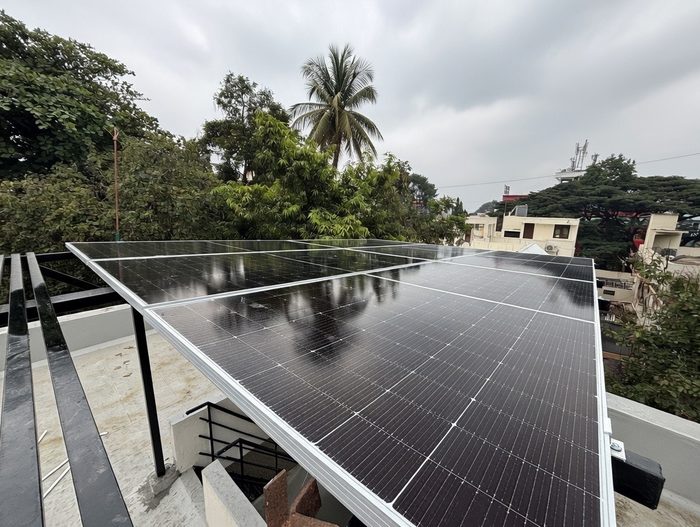
"Bill dropped from ₹5,000 to under ₹800. The battery keeps us running through power cuts. Seamless installation, clean finish."
Shekhar M. · Vijayanagar · 5 kWp Hybrid + Battery
₹3,000 → ₹0
"Our bill is zero now and we earn BESCOM credits. SunVana handled every approval — I didn't follow up on a single form."
Sudha R. · Basaveshwaranagar · 3 kWp On-Grid
₹6,000 → ₹2,000
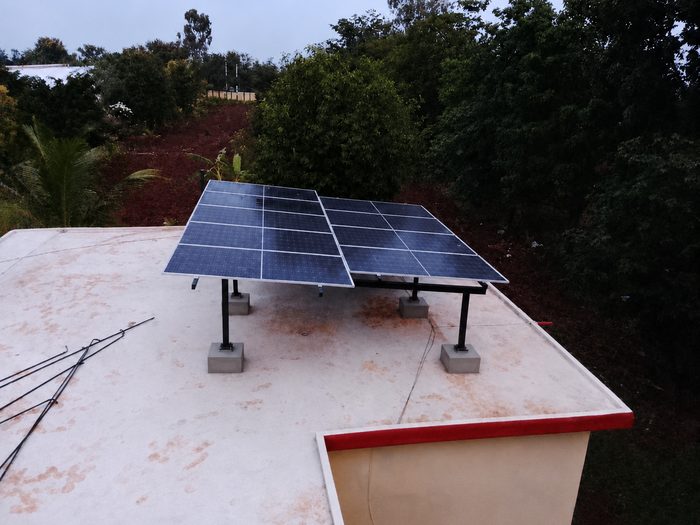
"Farmhouse near Yelahanka. Excess goes to the grid. Very happy with quality and support."
Amit P. · Yelahanka · 5 kWp On-Grid
Ready to stop paying for electricity?
One free home visit. An honest answer about what solar can do for your family — and if it can't, we'll tell you that too.
Free · No obligation · Mon–Sat 9am–6pm
About SunVana Energy · Bangalore, India
Power from principle.
We didn't set out to sell solar panels. We set out to change how India powers itself — one home, one farm, one community at a time.
25+Yr lifespan
"
We believe clean energy is not a luxury. It is a right — accessible to every home, every field, every community.
— The SunVana Mission
Our Story
Born from a belief in better.
"Every watt of clean energy is a step away from dependence — on fuel, on the grid, on the old way of doing things."
SunVana Energy was founded with a single conviction: that India's energy future must be clean, decentralized, and fair. With some of the world's highest solar irradiance, the opportunity to power the subcontinent through the sun has always been immense.
We built SunVana to close that gap. Based in Bangalore and serving clients across Karnataka and beyond, we combine cutting-edge solar engineering with hands-on human support — guiding every client from first conversation to long-term operation.
Our name says it all: Sun + Nirvana. A state of balance, achieved through the limitless, free energy of the sun. That's the philosophy behind every system we design, every installation we commission, and every rooftop we transform.
Today, we work with homeowners, farmers, industrialists, and institutions — delivering residential, agricultural, commercial, and hybrid energy solutions built to last for decades.
SUN
English / Sanskrit · Sūrya
The original, inexhaustible source. 5 billion years of energy, free for the taking. We simply put it to work for you.
+
Two ideas, fused into a single purpose. The physics of solar energy, married to the philosophy of harmony.
VANA
Sanskrit · Nirvāṇa
Liberation. The state of being free from dependence, from volatility, from the rising and falling of electricity tariffs.
What we stand for.
Our values are not aspirational posters on a wall. They are the decisions we make every day — in how we design systems, how we treat clients, and how we measure our own success.
01
Radical Tailoring
No two energy needs are identical. We refuse to sell off-the-shelf solutions. Every system built from the ground up around your goals.
02
Long-Term Thinking
A solar system is a 25-year relationship. We design, install, and maintain with that timeline in mind — success measured in decades.
03
Transparent Economics
We show you real numbers — payback periods, ROI projections, subsidy calculations. Honest arithmetic so you can decide with clarity.
04
Environmental Integrity
Every project reduces fossil fuel dependence and lowers carbon emissions. Sustainability is our foundation, not an afterthought.
How we work with you
Every SunVana engagement follows a rigorous, human-centered process — from your first call to years of seamless operation.
1
Consultation
We listen. Understanding your energy needs, budget, and goals before anything else.
2
Site Audit
Engineers assess your location, roof structure, shading, and grid connection.
3
System Design
A custom schematic with ROI and payback projections built around your requirements.
4
Installation
Certified technicians handle permits, wiring, panel mounting, and testing.
5
Lifelong Care
Monitoring, maintenance, cleaning, and performance reviews — for life.
A commitment that outlasts any contract.
Many solar companies end their relationship at installation. We're not built that way. Our commitment to your system is as long as the system itself — which means decades of monitoring, maintenance, and improvement.
We use intelligent performance-tracking tools to detect degradation early, schedule seasonal cleaning, and flag anomalies before they become problems. You'll always know how your system is performing — and so will we.
This is what we mean when we say SunVana isn't just a solar company. We're an energy partner. One that's invested in your independence from day one to year twenty-five and beyond.
☀️
Let's build your energy future.
Every journey begins with a conversation. Our solar experts are ready to understand your unique needs and design the perfect solution.
From a single rooftop to a sprawling industrial campus — SunVana engineers custom solar and wind energy solutions built to perform for decades.
Residential SolarCommercial PlantsAgricultural SystemsOn-Grid SolutionsOff-Grid SystemsHybrid PowerWind EnergySolar Water PumpsSystem MonitoringMaintenance & CareEV-Ready SolarResidential SolarCommercial PlantsAgricultural SystemsOn-Grid SolutionsOff-Grid SystemsHybrid PowerWind EnergySolar Water PumpsSystem MonitoringMaintenance & CareEV-Ready Solar
🏡
01
Service 01
Residential Solar
Cut electricity bills and build long-term value with a custom rooftop solar system. We handle site survey, design, permitting, installation, and ongoing support.
Solar-powered irrigation and farm lighting — designed for remote, off-grid reliability. Zero fuel cost, low maintenance, scalable from small to large farms.
Solar Water PumpsZero Fuel CostOff-Grid ReadyBattery OptionalIrrigation Compatible
Dual-purpose solar structures that shade and shelter your vehicles while generating clean electricity. Ideal for homes, apartment complexes, offices, and commercial parking areas — turning underused space into a productive energy asset.
The smartest way to go solar in 2026. Our EV-Ready package integrates your rooftop solar system with a certified EV charger — so you charge your car directly from the sun, at zero fuel cost. With smart load management and optional battery backup, your home becomes a complete energy hub.
☀️
Rooftop Solar System
3–10 kWp on-grid or hybrid system sized for your home load + EV charging demand. PM Surya Ghar subsidy up to ₹78,000 applicable.
🔌
Integrated EV Charger (AC)
7 kW AC charging point compatible with all Indian EVs — Tata Nexon, MG ZS, Ather, Ola, Bajaj Chetak and more. Adds ~40–50 km range per hour of charging.
🧠
Smart Load Management
Intelligent controller prioritises solar power for EV charging during daylight hours, draws from grid only when solar is insufficient. No bill spike from EV.
🔋
Optional Battery Backup
Add lithium battery storage to store excess solar. Charge your car at night using stored solar energy — true zero-cost overnight charging.
All EV Brands Compatible₹78K Subsidy EligibleSmart Load ControlBattery Backup OptionBESCOM Net Metering
We combine engineering precision with genuine customer care — from your first question to 25 years of clean power.
💰
Lowest Price, Zero Hidden Costs
Full itemised quote — panels, inverter, installation, subsidy processing — with absolutely no hidden charges. What we quote is what you pay.
📈
Assured 4–5 Year Payback
Our systems are sized so most homes recover their investment within 4–5 years and enjoy free electricity for the next 20+ years after that.
🛠️
Zero-Hassle End-to-End
We handle site survey, system design, BESCOM approvals, subsidy paperwork, installation, and ongoing maintenance. You just flip the switch.
🏅
25-Year System Guarantee
12-year panel product warranty + 25-year performance guarantee. 10-year warranty on inverters. We stand behind every installation we do.
🏦
Instant EMI & Loan Options
Partner banks, 0-cost 6-month EMI, and full solar loan processing. We make solar affordable for every budget, not just large ones.
🏛️
PM Surya Ghar Subsidy Handled
We manage the entire MNRE subsidy application — up to ₹78,000 off for residential systems. You just sit back while we file for you.
Smart Financing
Your electricity bill just became a 4-year investment plan.
For the next 4 years, you simply redirect the money you already spend on electricity into solar. After that, the power is yours — and the bill is gone for life.
Partnered with leading Public Sector BanksSunVana handles the entire loan process6-month, 0-cost EMI option availableLoan pre-approval within 24 hours
₹4,000/month bill — 5-year cashflow projection
Year 1
₹48,000
Year 2
₹48,000
Year 3
₹38,000
Year 4
₹12,000
Year 5+
FREE ☀️
Savings Calculator
Calculate your exact savings.
Enter your monthly electricity bill to see how much you could save with SunVana solar.
What's your monthly electricity bill? (approximate is fine)
₹4,000
₹500/month₹30,000/month
Annual Savings
₹43,200
per year
Payback Period
4.2 yrs
estimated
25-Year Value
₹10.8L
total savings
Estimates based on Bangalore's average solar irradiance & current BESCOM tariffs. Get a precise, tailored quote for your home.
Coverage
We serve all of Bangalore & Karnataka.
SunVana installs solar systems across Bangalore's top residential areas, with rapid-dispatch teams ready across the city and beyond.
Everything you need to understand solar energy, make informed decisions, and get the most out of your system — from first question to long-term ownership.
💡Savings & ROI
Solar Cost & Savings Guide for Homes in India 2025
A complete breakdown of what a rooftop solar system costs in India, what subsidies are available, and how to calculate your exact payback period — including real-world examples from Bangalore homeowners.
12 min read
🏛️Policy
Karnataka & Central Government Solar Schemes: What Every Bangalore Homeowner Should Know in 2026
Complete guide to PM Surya Ghar subsidy, BESCOM net metering tariffs, and Karnataka solar policy benefits — with exactly what you qualify for and how to apply.
9 min read
⚡Technology
On-Grid, Off-Grid, or Hybrid? How to Choose the Right Solar System for Your Bangalore Home
Clear comparison of all three solar system types — costs, backup capability, ideal use cases, and which makes financial sense for most Bangalore homes.
9 min read
🔌Technology
How On-Grid Solar Handles Power Cuts: What Every Bangalore Homeowner Needs to Know
Why on-grid solar shuts down during BESCOM power cuts, the anti-islanding safety rule explained simply, and whether this should change your system choice.
10 min read
❄️Buyer's Guide
Can Solar Power Run Your AC?
Real sizing numbers, monthly bill impact, and what system you need to run air conditioning on solar in Bangalore — without surprises.
8 min read
🔬Technology
DCR vs Non-DCR Solar Modules: What You Must Know Before Buying
How the DCR vs Non-DCR distinction affects your PM Surya Ghar subsidy eligibility — and why getting this wrong can cost you ₹78,000.
9 min read
💳Savings & ROI
Everything You Need to Know About Solar Financing in India 2026
SBI solar loan rates, PM Surya Ghar-linked bank loans, EMI options, and how to compare financing offers without getting trapped by fine print.
11 min read
🔧Maintenance
Solar Maintenance Checklist for Bangalore Homeowners
Monthly cleaning, quarterly inverter checks, annual health inspections — a complete maintenance schedule so your system performs for 25 years.
11 min read
🌧️Buyer's Guide
Do Solar Panels Work in Bangalore Monsoon & Winter?
Month-by-month solar generation data for Bangalore — honest breakdown of monsoon output loss, winter performance, and what it means for your annual savings.
9 min read
⚙️Technology
What Is a 3-Phase Meter? Types, Benefits & Solar Guide
Complete guide to 3-phase meters for Indian homeowners — types, how they differ from single-phase, and what it means for your solar installation and net metering.
10 min read
⚡Technology
On-Grid vs Off-Grid vs Hybrid: Which System is Right for You?
Understand the key differences between the three main solar system architectures and how to choose the best fit for your home, budget, and location.
🏛️Policy
PM Surya Ghar Scheme: How to Claim Up to ₹78,000 in Subsidy
A step-by-step walkthrough of the PM Surya Ghar Muft Bijli Yojana — eligibility, documentation, application process, and how SunVana handles it for you.
🏡Buyer's Guide
The Complete Home Solar Buyer's Guide for Bangalore
Everything a first-time buyer needs to know — sizing your system, understanding contracts, evaluating installers, and avoiding common mistakes.
🔋Technology
Solar Panels, Inverters & Batteries: A Component Deep-Dive
What makes a high-quality solar panel? What should you know about inverters and battery storage? This guide covers the components that matter most.
🔧Maintenance
How to Maintain Your Solar System for Peak Performance
Cleaning schedules, monitoring tips, performance benchmarks, and when to call a technician — everything you need to keep your system producing at 100%.
📊Savings & ROI
Net Metering in Bangalore: How to Sell Solar Back to BESCOM
A practical guide to BESCOM's net metering programme — how it works, how to apply, what you earn, and how to maximise your credits.
🌾Buyer's Guide
Agricultural Solar in India: Powering Farms with Free Energy
Solar water pumps, irrigation systems, and off-grid farm power — how farmers across Karnataka are eliminating fuel costs and grid dependency.
📋Policy
Karnataka Solar Policy 2024: What Every Homeowner Should Know
BESCOM regulations, KERC tariff orders, and state-level incentives — simplified for homeowners who want to understand the rules before investing.
Common Questions
Frequently asked questions.
Can't find what you're looking for? Our team is happy to walk you through anything — from technical specs to subsidy paperwork.
How much does a home solar system cost in Bangalore?
+
A typical 3 kW residential system costs between ₹1.5–2.5 lakhs before subsidies in Bangalore. After the PM Surya Ghar subsidy (up to ₹78,000 for systems up to 3 kW), the effective cost comes down significantly. SunVana provides full, itemised quotes with no hidden charges.
How long does installation take?
+
Most residential installations are completed within 1–2 days once all approvals are in place. The full process including BESCOM sanction and net metering connection typically takes 3–6 weeks, during which SunVana manages all the paperwork on your behalf.
What is the difference between on-grid and off-grid solar?
+
On-grid systems are connected to the utility grid and export surplus power back for credits (net metering) — ideal for urban homes. Off-grid systems use batteries for full independence, suited for locations with unreliable grid supply. Hybrid systems combine both, giving you net metering benefits plus battery backup for outages.
Will solar work during power cuts?
+
Standard on-grid systems shut down during grid outages (a safety requirement). If you want power during cuts, you need a hybrid or off-grid system with battery storage. SunVana will recommend the right configuration based on your grid reliability and backup needs.
What is the PM Surya Ghar subsidy and do I qualify?
+
PM Surya Ghar Muft Bijli Yojana offers central government subsidies of ₹30,000–₹78,000 for residential rooftop solar installations up to 3 kW. Most homeowners with a BESCOM connection and a valid electricity bill qualify. SunVana handles the entire application process at no extra charge.
How often do panels need cleaning?
+
In Bangalore's climate, panels should ideally be cleaned every 4–6 weeks to prevent dust buildup from reducing output. SunVana's maintenance plans include monthly professional cleaning and performance checks, ensuring your system always runs at peak efficiency.
What warranty does SunVana provide?
+
We provide a 12-year product warranty on panels plus a 25-year performance guarantee (panels retain at least 80% output). Inverters carry a 10-year warranty. All workmanship is guaranteed for 5 years. We also offer extended maintenance contracts for ongoing peace of mind.
Quick Calculator
See your savings right now.
Drag the slider to match your electricity bill and instantly see how much you could save each year with SunVana solar.
Your monthly electricity bill
₹4,000
₹500₹30,000
Annual Savings
₹43,200
25-Year Value
₹10.8L
Ready to make the switch? We'll design your system for free.
100% Free · No Commitment · Expert-Led
Your free home solar assessment.
A certified SunVana engineer visits your home, evaluates your roof, energy usage, and orientation — then designs a system perfectly sized for your needs. Completely free, no sales pressure.
🏠 On-site visit📐 Roof & shading analysis📊 Custom system design💰 Savings projection🏛️ Subsidy guidance✅ Zero obligation
What's included in your assessment
Our engineer covers everything in a single 60-minute visit
📐
Rooftop Evaluation
Structural suitability, orientation, tilt angle and available area measured precisely
☁️
Shading & Solar Irradiance Analysis
We map shadows from trees, buildings and obstructions throughout the day
⚡
Energy Consumption Review
Analysis of your bills and usage patterns to right-size your system
📊
Custom System Design & Quote
A detailed proposal with system size, components, and a full cost breakdown
💰
ROI & Savings Projection
25-year savings estimate, payback period, and subsidy eligibility calculated
✓ Completely Free · No Obligation
How It Works
Book your visit in under 2 minutes.
Fill in the form, pick a date that works for you, and one of our certified solar engineers will arrive at your home ready to give you a full picture of your solar potential.
1
Book online
Fill the form — takes under 2 minutes. Choose your preferred date and time.
2
We confirm within 2 hours
Our team calls to confirm your appointment and answer any initial questions.
3
Engineer visits your home
A certified SunVana engineer arrives on time and conducts a thorough 60-minute assessment.
4
You receive your custom proposal
Within 24 hours you get a detailed system design, full cost breakdown, and savings report — no pressure to proceed.
Book your free assessment.
Our engineer visits your home at a time that suits you — completely free.
🏡Independent House
🏢Apartment / Flat
🏰Villa
🏭Commercial
9–10 AM
10–11 AM
11 AM–12 PM
2–3 PM
3–4 PM
4–5 PM
🔒 Your details are secure and never shared
📅
Assessment booked!
We'll call you within 2 hours to confirm your appointment. Your SunVana engineer will arrive fully prepared.
Every roof is different. A free assessment ensures your system is perfectly designed — not just a generic estimate.
📐
Right-sized system
An undersized system won't meet your needs. An oversized one wastes money. On-site measurement ensures the exact right capacity.
☁️
Shading kills output
Even partial shade from a single tree can reduce output by 30%. We map your roof's sun exposure at every hour of the day.
🏗️
Structural safety
Not every roof can handle solar panels. Our engineer checks load capacity, material condition, and mounting feasibility before any commitment.
💰
Maximum savings
Online calculators give ballpark figures. A real assessment gives you a precise, guaranteed savings projection based on your actual home.
Day of Your Assessment
What to expect on the day.
Our engineer follows a structured process to ensure nothing is missed. Here's exactly what happens during your 60-minute visit.
1
Arrival · 0–5 min
Engineer arrives & introduces
Our certified engineer arrives on time, introduces themselves and walks you through what the assessment covers.
2
Roof Survey · 15–25 min
Full rooftop measurement
Roof dimensions, structural inspection, orientation, tilt, shading analysis, and condition assessment carried out in full.
3
Energy Review · 10–15 min
Usage & bill analysis
We review your electricity bills, appliance loads, and usage patterns to accurately size your system and project savings.
4
Discussion · 15–20 min
Q&A, options & next steps
We discuss system types, subsidy options, EMI, and answer every question. No pressure — your detailed proposal follows within 24 hours.
Your Questions
Assessment FAQs.
Everything you need to know about your free home assessment visit.
Is the home assessment really free?+
Yes — completely free with no hidden charges. The assessment includes a full rooftop survey, energy analysis, custom system design, and a savings projection. There is zero obligation to proceed with SunVana after the visit.
How long does the assessment take?+
Typically 45–75 minutes depending on the size and complexity of your property. Our engineer will let you know if they need a bit more time when they arrive.
Do I need to prepare anything before the visit?+
Just have access to your rooftop available and, if possible, a copy of your last 2–3 electricity bills. Our engineer will handle everything else. You don't need to purchase anything or arrange any equipment.
When will I receive my system design and quote?+
Within 24 hours of the visit you'll receive a detailed proposal via email and WhatsApp — including system layout, component specifications, full cost breakdown, subsidy eligibility, and your 25-year savings projection.
Is my home suitable for solar?+
Most homes in Bangalore are suitable for solar, but the only way to know for certain is an on-site assessment. Factors like roof orientation, structural condition, shading, and available area all affect viability. Our engineer will give you an honest answer during the visit.
Which areas of Bangalore do you cover?+
We cover all areas of Bangalore including Whitefield, Sarjapur, Indiranagar, JP Nagar, Koramangala, Malleshwaram, Yelahanka, Electronic City, HSR Layout, Hebbal, and the surrounding Karnataka region. Book and we'll confirm your area availability.
Ready to see your home's solar potential?
Book your free assessment today. No commitment, no pressure — just clarity.
Free Commercial Assessment
ENERGY AUDIT REQUEST
A certified SunVana engineer analyses your facility's energy consumption, identifies solar potential, and delivers a detailed ROI report — at zero cost to you.
30%
Avg. bill reduction
3–5 yr
Payback period
100%
Free audit
Scroll to learn more
Step 1 of 1 — Fill in your details
Request Your Free Energy Audit
We respond within 24 hours to schedule your site visit.
Reduce electricity costsESG / carbon goalsPower backupSubsidy eligibilityRooftop solarGround mount solarEV charging infra
No cost, no obligationMNRE certified engineersReport in 5 days
⚡
Audit Request Received!
Our commercial solar team will contact you within 24 hours to confirm your site visit.
Scope of Assessment
Six areas our engineers assess in detail.
01
🏗️
Rooftop & Structural Survey
Load-bearing assessment, roof type analysis, shading study, and usable area calculation to determine maximum system capacity.
02
📊
Electricity Consumption Analysis
12-month consumption pattern study, peak demand profiling, power factor analysis, and load forecasting for accurate system sizing.
03
☀️
Solar Irradiance & Yield Modelling
Site-specific solar resource assessment using NASA & MNRE data, yield simulation, and P90 generation forecast with seasonal variation.
04
💰
Financial ROI & Payback Report
Detailed capex vs. savings model, payback period calculation, subsidy and incentive mapping, EMI/loan structuring, and 25-year NPV projection.
05
🔌
Grid & Utility Assessment
BESCOM / HESCOM connection type review, net metering eligibility, grid stability analysis, and HT/LT tariff optimisation recommendations.
06
📋
Regulatory & Compliance Review
MNRE policy applicability, state DISCOM regulations, RPO (Renewable Purchase Obligation) compliance, and applicable subsidy eligibility.
Our Process
From request to report in 5 working days.
📝
Request
Fill the form. We confirm within 24 hrs.
Day 1
📞
Briefing Call
15-min call to understand your facility and goals.
Day 1–2
🏗️
Site Visit
Certified engineer visits your facility for full survey.
Day 2–3
⚙️
Analysis
Yield modelling, ROI calculation, system design.
Day 3–4
📄
Report Delivered
Full audit report with proposal sent to you.
Day 5
Ideal For
Built for businesses that run on power.
🏭
Manufacturers
Factories, plants and production units with high daytime energy draw — ideal solar candidates.
🏢
Offices & IT Parks
Commercial buildings with large rooftops and predictable consumption patterns.
🎓
Schools & Colleges
Educational institutions with large campuses and special MNRE subsidy eligibility.
🏨
Hotels & Hospitality
High electricity consumption facilities with strong ESG and cost-saving incentives.
Questions
Common questions.
Is the energy audit really free? +
Yes — SunVana's commercial energy audit is completely free of charge with no obligation to proceed. We believe in letting the numbers speak for themselves.
How large does my facility need to be? +
We typically work with facilities that have a monthly electricity bill of ₹25,000 or more and a minimum rooftop area of around 1,000 sq ft. Smaller facilities may still qualify — contact us to discuss.
What do I need to prepare before the site visit? +
Ideally, provide your last 12 months of electricity bills and basic building plans if available. Our engineer will handle the rest during the site visit — no special preparation is required.
How long does the site visit take? +
Typically 2–4 hours depending on facility size. Our engineer will survey the rooftop, inspect the electrical panel, and photograph key areas. Larger campuses may require a full day.
What does the audit report include? +
The report includes a recommended system size, projected generation, estimated savings, payback period, 25-year financial model, applicable subsidies, and a detailed project proposal with pricing.
Does SunVana handle BESCOM approvals and subsidies? +
Yes — SunVana manages all DISCOM approvals, net metering applications, MNRE registrations, and subsidy claims end-to-end. You don't need to navigate any paperwork.
Ready to see your savings potential? Request your free audit today.
🌾Agricultural Solar — Karnataka & Beyond
Design your farm system.
Tell us about your land, crops and water needs — and we'll design a solar system that eliminates your pump fuel costs and powers your farm for 25 years.
🌱Zero diesel costs
💧Reliable irrigation 24/7
🏛️Government subsidy eligible
🔧Low maintenance systems
📱Remote monitoring
🤝Free site survey
🌾 Free Farm System Design
Tell us about your farm
We'll design the right system and send you a free quote within 48 hours.
1What do you primarily need solar for?
💧Water PumpIrrigation & borewell
💡Farm LightingLights & fans
⚡Pump + PowerBoth pump & general load
❄️Cold StorageRefrigeration & storage
2Farm details
3Your location & contact
⚡ Estimated System (based on your selection)
System TypeSolar Water Pump
Recommended Size3–5 HP Solar Pump
Subsidy AvailableGovt subsidy — up to 60%
Est. Diesel Savings₹60,000–₹1.2L / yr
Free, no-obligation quote within 48 hours. Government subsidy support included.
🌾
Your Request is Received!
Our agricultural solar team will contact you within 48 hours with a custom farm system design.
What We Install
Agricultural solar solutions we specialise in.
From single-pump setups to multi-acre solar farms, SunVana designs and installs the right system for your land, crop, and budget.
💧
Most Popular
Solar Water Pumps
DC and AC solar pumps from 1–15 HP for bore wells, open wells, and canals. Completely off-grid with no electricity bill.
🌱
Water Efficient
Drip Irrigation Solar
Solar systems designed specifically for drip and sprinkler irrigation — automated, efficient, and perfect for horticulture.
💡
Off-Grid Power
Farm Power & Lighting
Complete off-grid solar systems for farm houses, sheds, poultry, dairy units — lighting, fans, small appliances, security.
❄️
Agri Cold Chain
Solar Cold Storage
Solar-powered cold rooms and refrigeration units for vegetable, fruit, and flower farmers to reduce post-harvest losses.
🛡️
Crop Protection
Solar Fencing
Energiser-based solar electric fencing to protect crops from wildlife and stray cattle without running grid power to field perimeters.
☀️
Large Scale
Agri Solar Power Plants
Ground-mounted solar plants on farm land for high-capacity power generation — eligible for net metering and surplus power export.
Why It Makes Sense
Why Karnataka farmers are switching to solar.
01
Eliminate Diesel Costs Forever
Diesel pumps cost ₹60,000–₹2,00,000 per year in fuel. Solar eliminates this expense from day one, with zero ongoing fuel cost.
02
Government Subsidy — Up to 60%
Government schemes offer up to 60% subsidy on solar pumps for farmers. SunVana handles all the paperwork.
03
Irrigation on Your Schedule
No more waiting for scheduled grid power. Solar pumps give you full control — irrigate whenever your crops need water.
04
25-Year System Life
Solar panels last 25+ years with minimal maintenance. Low moving parts means low breakdowns compared to diesel engines.
05
Payback in 2–4 Years
After subsidy, most farmers see full system payback in just 2–4 years — then enjoy 20+ years of free energy for their farm.
06
Works Without Grid Power
Solar systems work completely independently of the grid — ideal for remote farms with unreliable or no electricity supply.
FAQ
Common questions.
What government subsidies are available for agricultural solar? +
Govt agricultural solar scheme (Pradhan Mantri Kisan Urja Suraksha evam Utthan Mahabhiyan) offers 60% subsidy on solar pumps for farmers — 30% from central government, 30% from state. Most farmers with agricultural land and an electricity connection qualify. SunVana handles the complete application.
What size solar pump do I need? +
The right pump size depends on your land area, crop water requirement, borewell depth, and daily usage hours. Our engineer will assess these factors during the free site visit and recommend the optimal HP rating — typically 3–7.5 HP for 2–10 acre farms.
Will the pump work on cloudy days? +
Solar pumps run at reduced speed on cloudy days but continue to function. For farms needing guaranteed all-weather availability, we can add battery storage or a hybrid grid connection. Our team will recommend the right configuration for your region.
How much land is needed for panels? +
A 3 HP solar pump system typically requires around 150–200 sq ft of open panel space. For larger ground-mounted systems, we design panel layouts to minimise agricultural land use — panels can also be elevated to allow crops to grow underneath (agri-voltaic design).
Does SunVana service remote village locations? +
Yes — SunVana serves farms across Karnataka including remote taluks in Tumkur, Hassan, Mandya, Mysore, Davangere, Bellary and beyond. We have field teams that travel to site for survey, installation and after-sales service.
Ready to power your farm with free sunlight?
Pump Configurator
Size your solar pump for your land.
2
40
Solar Carports — Design & Install
DESIGN YOUR CARPORT.
A solar carport shades your vehicles, generates clean electricity, and can charge your EVs — all from the same structure. Tell us your parking space and we'll design it for free.
Answer 4 quick questions and we'll send your free design & quote within 48 hours.
1Where will the carport be installed?
🏠Home / Villa1–4 cars
🏢ApartmentCommon parking
🏗️Office / CommercialLarge parking lot
🏭Industrial / Campus50+ car spaces
2How many parking spaces?
🚗1–2 cars~3–5 kW
🚗🚗3–6 cars~6–12 kW
🅿️7–15 cars~15–30 kW
🏙️15+ cars~30 kW+
3Do you want EV charging points?
❌No EV charging
🔌1–2 EV points
⚡Full EV station
🚗 Your Estimated Carport Spec
Installation TypeResidential Carport
Est. System Size3–5 kW
Annual Generation4,500–7,000 units
Est. Annual Savings₹36,000–₹56,000
EV ChargingNot included
4Your details
Free design & quote in 48 hrs. No obligation to proceed.
🚗
Design Request Received!
Our carport design team will contact you within 48 hours with a customised layout and quote.
Types We Install
Solar carports for every property type.
From single-car home canopies to large commercial parking lot structures — SunVana designs, engineers, and installs solar carports across Bangalore and Karnataka.
🏠
Residential
Home & Villa Carports
Custom-designed single or double car solar canopies for independent houses and villas. Powder-coated steel or aluminium frames with high-efficiency panels.
1–4 cars3–8 kWEV-ready optionNet metering
🏢
Residential Complex
Apartment & Society Carports
Multi-car covered parking structures for apartment blocks and gated communities. Solar power offsets common area electricity and EV charging for residents.
5–50 cars10–100 kWShared EV chargingGrid export
🏗️
Commercial
Office & Commercial Carports
Large-scale covered parking structures for office parks, malls, hospitals and institutions. High-capacity solar generation with SCADA monitoring and fast EV chargers.
50–500+ cars100 kW+Fast EV chargingSCADA monitoring
Why Solar Carports
Six reasons a solar carport beats a regular shed.
01
☀️
Generate Power While You Park
Every square foot of canopy becomes a power plant. A 4-car carport can generate 15,000–25,000 units of electricity annually.
02
🔌
Built-In EV Charging
Integrate AC or DC fast chargers directly into the structure — charge your EV from the solar power generated by the roof above it.
03
🛡️
Protect Your Vehicles
Shade reduces cabin temperature by up to 20°C on hot days and protects paintwork from UV, hail, and bird damage year-round.
04
💰
No Rooftop Space Needed
If your rooftop is shaded, occupied, or structurally limited, a carport is an ideal alternative — using land you already have.
05
🌿
ESG & Green Credentials
For commercial properties, a visible solar carport signals sustainability commitment to clients, tenants, and employees.
06
📈
Fast ROI — 4–6 Years
Solar carports typically pay back in 4–6 years and then generate free electricity for the next 20 years — a strong long-term asset.
Questions
Common questions.
How much space is needed for a solar carport? +
A standard single car space is approximately 10×20 ft (200 sq ft). A 2-car carport (400 sq ft) can accommodate a 4–6 kW solar system. Exact dimensions depend on the canopy design — our engineers optimise for maximum panel area within your available space.
What materials are used for the structure? +
SunVana builds carport structures using hot-dip galvanised steel or aluminium framing with powder-coat finish, rated for 25+ years outdoors. Panel mounting uses standard Z and L-brackets. All structures are designed to Indian wind and load standards.
Can I add EV charging to an existing carport? +
Yes — we can retrofit solar panels and EV chargers onto existing shade structures if the frame is structurally adequate. Our engineers assess this during the free site visit. New builds can always incorporate EV charging from day one.
Does my society need permission to install a carport? +
Requirements vary by municipality and society bylaws. In most Bangalore cases, covered parking structures below a certain height don't require a building permit, but BESCOM net metering approval is needed for grid connection. SunVana handles all regulatory filings.
What is the maintenance requirement? +
Solar carports require minimal maintenance — primarily panel cleaning every 4–6 weeks to maintain peak output. The steel structure requires an annual check and occasional re-painting after 7–10 years. SunVana offers annual maintenance contracts for both panels and structure.
Turn your parking into a power plant.
Smart Configurator
Build your carport system spec by spec.
4
0
Wind Energy — Small Turbines & Hybrids
Power from wind & sun.
When solar sleeps at night and during monsoon, wind keeps generating. Small turbines and solar-wind hybrid systems deliver 24/7 clean energy independence for homes, farms, and off-grid sites.
24/7
Generation
1–50kW
System range
Low
Noise & vibration
🌬️ Wind Feasibility Enquiry
Explore wind solutions
Tell us about your site and we'll assess wind feasibility and recommend the right system.
1What best describes your site?
🏠Home / VillaResidential rooftop
🌾Farm / RuralOpen land, off-grid
🏢CommercialOffice / factory roof
🏝️Remote / IslandNo grid, full off-grid
2What system interests you?
⚡Solar + Wind HybridBest of both
🌬️Wind OnlyStandalone turbine
🔋Hybrid + BatteryFull off-grid
💬Not sure yetNeed guidance
🌬️ Preliminary Suitability Assessment
Recommended SystemSolar-Wind Hybrid
Typical Size Range1–3 kW Wind + Solar
Best Wind MonthsNov – Mar (NE monsoon)
Est. Coverage80–100% of load
3Your details
Free feasibility assessment. Our wind energy team will respond within 24 hours.
🌬️
Enquiry Received!
Our wind energy specialist will review your site details and contact you within 24 hours.
Our Wind Portfolio
Wind systems we design and install.
From compact rooftop micro-turbines to large hybrid farms — SunVana works with certified turbine manufacturers to engineer the right wind solution for your site.
🌀
Most Popular
Small Horizontal-Axis Turbines
1–10 kW horizontal-axis wind turbines for homes, farms and small commercial sites. Pole-mounted, low cut-in speed (2.5 m/s), quiet operation.
1–10 kW · 6–12 m tower · Low noise
☀️🌬️
Recommended
Solar-Wind Hybrid Systems
Combined solar + wind systems with shared inverter and battery bank. Solar generates by day, wind by night and during monsoon — near 24/7 coverage.
2–20 kW · Grid or off-grid · Battery optional
🔄
Urban & Rooftop
Vertical-Axis Turbines (VAWT)
Compact vertical-axis turbines ideal for urban rooftops, terraces and buildings. Multi-directional — no yaw mechanism needed, works with turbulent wind.
0.5–5 kW · Rooftop-ready · Silent
💨
Off-Grid
Micro Wind + Battery Storage
Full off-grid wind systems with lithium or lead-acid battery banks for remote homes, telecom towers, agricultural pump houses without grid access.
0.5–3 kW · Full off-grid · 24–48V DC
How It Works
Solar by day, wind by night.
A solar-wind hybrid system is the most reliable off-grid or backup energy solution available. Solar panels generate peak power during clear daylight hours. Wind turbines pick up at night, during cloudy weather, and especially during the monsoon — the season solar underperforms most. Together, they provide near-continuous generation across every season.
☀️
Solar Panels
→
⚙️
Hybrid Inverter
→
🔋
Battery Bank
↑
🌬️
Wind Turbine
🏠Powers your home / facility
⚡Exports to grid (net metering)
🚗Charges EVs (optional)
Site Suitability
Is your location suitable for wind?
✓ Good for Wind
🌊
Coastal & Hilltop Sites
Coastal Karnataka (Mangalore, Udupi, Karwar) and hilltop locations see consistent wind speeds of 5–8 m/s — ideal for standalone or hybrid wind systems.
✓ Good for Wind
🌾
Open Rural & Farm Land
Open agricultural land with minimal obstructions sees reliable wind, especially in the Deccan Plateau region. Ideal for solar-wind hybrid farm systems.
⚠ Assess First
🏢
Urban Rooftops
Urban areas have turbulent, unpredictable wind patterns. VAWT turbines work better here than HAWTs, but a site wind study is essential before investing.
✓ Excellent
🏝️
Islands & Remote Off-Grid
Islands (Lakshadweep, Andaman) and remote sites with no grid access are among the best wind-hybrid candidates — replacing expensive diesel with free, clean energy.
✓ Hybrid Ready
🌧️
Monsoon-Heavy Regions
High-rainfall areas where solar underperforms in Jun–Sep benefit greatly from solar-wind hybrids — wind compensates exactly when solar is weakest.
✗ Not Recommended
🏙️
Dense Urban — Solar Only
Heavily built-up urban areas with surrounded buildings and low wind speed (under 3 m/s) are rarely viable for wind alone. Solar rooftop is a better choice here.
Questions
Common questions.
How do I know if my location has enough wind? +
The minimum viable average wind speed for a small turbine is around 4–5 m/s. SunVana assesses your location using NASA MERRA-2 wind resource data and, where warranted, installs a temporary anemometer for 1–3 months to measure actual wind at your site height before recommending a system.
How tall does a wind turbine tower need to be? +
Small turbines for homes and farms typically require 6–12 metre towers to clear nearby obstacles and reach cleaner wind. Rooftop VAWT installations can be lower. Tower height is determined by your site's obstruction profile — taller is almost always better for wind yield.
Are small wind turbines noisy? +
Modern small wind turbines operate at 35–45 dB at 60 metres — comparable to a quiet library. At the recommended setback distance from living areas (typically 3× the tower height), noise is not a concern for residential installations.
Can wind turbines work during the Karnataka monsoon? +
Yes — wind turbines are designed to operate in rain and high humidity. Monsoon is actually among the most productive wind months in coastal and semi-coastal Karnataka, making solar-wind hybrids especially valuable for the June–September period when solar generation drops.
What maintenance do wind turbines require? +
Small turbines require annual inspection of blades, tower, and electrical connections, plus bearing lubrication every 2–3 years. Most manufacturers offer 5-year warranties. SunVana provides annual maintenance contracts covering all inspection, lubrication, and electrical safety checks.
Curious if wind works for your site?
Solar AMC & Monitoring — Bangalore & Karnataka
Your system, always at peak output.
A SunVana Annual Maintenance Contract keeps your solar system clean, monitored, and performing at its best — year after year. No surprises, no downtime, no lost generation.
We confirm your plan within 24 hours. First service visit scheduled within 7 days.
✅
Plan Request Received!
Our maintenance team will confirm your plan and schedule your first visit within 24 hours.
Plans Comparison
What's in each plan.
All plans include licensed SunVana technicians, genuine parts where replaced, and digital service reports after every visit. Pricing is per system, not per kW.
Feature
Basic ₹3,500/yr
Standard ⭐ ₹7,500/yr
Premium ₹14,000/yr
Commercial Custom
Panel cleaning visits/year
2
4
6
Custom
Performance health check
✓
✓
✓
✓
Inverter inspection
—
✓
✓
✓
Wiring & earthing check
—
✓
✓
✓
24/7 remote monitoring
—
Add-on
✓
✓
Digital performance report
Annual
Quarterly
Monthly
✓
Minor parts replacement
—
—
✓
✓
Priority breakdown response
—
48 hrs
24 hrs
4–8 hrs
Dedicated account engineer
—
—
—
✓
SCADA / advanced monitoring
—
—
—
✓
Annual Price
₹3,500
₹7,500
₹14,000
Get Quote
Service Scope
Everything covered in every visit.
🧹
Panel Cleaning
Professional wet cleaning of all panels using purified water and soft brushes. Removes dust, bird droppings and soiling — restoring 5–15% of lost generation.
Per visit
📊
Performance Benchmarking
Comparison of actual vs. expected generation. Identifies underperforming strings, shading issues, or degrading panels before they become costly problems.
Every visit + digital report
🔌
Inverter Health Check
Full inverter inspection — error code review, cooling fan check, DC/AC voltage readings, firmware check, and connection tightening. Standard & Premium plans.
Every visit (Standard+)
⚡
Wiring & Earthing Audit
Visual inspection of all DC/AC wiring, conduit integrity, junction boxes and earthing continuity — critical for safety and performance over the system's lifespan.
Every visit (Standard+)
🛡️
Structure & Mounting Check
Inspection of panel mounting hardware, roof penetration seals, rail alignment and any corrosion on structural members — especially important after monsoon.
Annual
📱
Remote Monitoring Setup
Where inverter monitoring portals are available, SunVana configures your monitoring dashboard and alerts you to any fault or generation anomaly between visits.
24/7 (Premium & Commercial)
How It Works
From signup to first service visit.
📋
Choose a Plan
Select the plan that suits your system size and submit your details.
📞
Confirmation Call
We call within 24 hrs to confirm, collect system info and schedule the first visit.
🔧
First Service Visit
Certified technician visits within 7 days for a full baseline service and health check.
📊
Ongoing Care
Regular scheduled visits, digital reports and priority breakdown support all year.
Questions
Common questions.
Does my solar system need a maintenance contract? +
Solar panels are low-maintenance but not zero-maintenance. Dust and soiling can reduce output by 10–25% in Bangalore's environment. Regular cleaning and health checks protect your investment, ensure warranty compliance, and extend the life of your inverter — the most expensive component to replace.
Can SunVana maintain a system installed by another company? +
Yes — SunVana maintains solar systems from any installer. We carry out a one-time baseline health check on first visit to document the system's current condition, and then proceed with the agreed plan. We service all major inverter brands and panel makes.
What happens if my inverter fails between visits? +
Standard and Premium plan holders receive priority breakdown response — 48 hours for Standard, 24 hours for Premium. Commercial plan holders have a dedicated engineer with 4–8 hour SLA. Basic plan holders receive standard response. Parts and labour for faults outside normal wear are quoted separately.
Is the AMC price per system or per kW? +
AMC pricing is per system (per installation address), not per kW — so a 5 kW and a 10 kW system at the same site pay the same plan rate. For sites with multiple separate systems (e.g. two buildings), a separate plan applies to each installation. Commercial plans are custom-priced based on size and complexity.
Do I get a report after every visit? +
Yes — every service visit is followed by a digital report sent to your email showing what was serviced, current system health status, generation benchmark vs. expected, and any recommendations. Standard plans receive quarterly summary reports; Premium receives monthly.
Keep your system performing its best.
Commercial & Industrial Solar · Bangalore
CUT YOUR ENERGY BILL BY 60–80%.
SunVana designs and installs large-scale rooftop solar for factories, warehouses, offices, schools, hospitals, and housing societies. Free energy audit. Transparent ROI. End-to-end execution.
From 10 kW rooftops to 1 MW ground-mounted plants — we size, design, and deliver every commercial solar installation in Bangalore and across Karnataka.
🏭
Factories & Warehouses
Large flat rooftops with high daytime loads — ideal for solar. Reduce grid dependency and lock in energy costs for 25 years.
Typical: 50 kW – 1 MW
🏢
Offices & IT Parks
Match solar generation to peak office hours (9am–5pm). Cut common-area and HVAC electricity bills dramatically.
Typical: 20 kW – 500 kW
🏫
Schools & Colleges
Government subsidy available for educational institutions. Set an example for students while reducing operating costs.
Typical: 10 kW – 100 kW
🏥
Hospitals & Clinics
24/7 critical load facilities benefit most from hybrid solar + battery systems. Ensure power continuity and slash bills.
Typical: 25 kW – 200 kW
🏘️
Housing Societies & Apartments
Electrify common areas, lifts, and pumps with solar. Residents pay less maintenance — a proven selling point for new projects.
Typical: 20 kW – 200 kW
🛒
Retail & Commercial Complexes
High daytime footfall = high AC and lighting load. Solar offsets peak commercial tariff rates (₹10–₹12/unit in Karnataka).
Typical: 30 kW – 300 kW
Our Process
From inquiry to generating savings.
01
Free Energy Audit
Our engineers visit your facility, audit your electricity bills (last 12 months), assess your rooftop, and model your solar potential using real shading and load data.
02
Custom System Design & ROI Report
We deliver a detailed proposal: system size, panel layout, inverter spec, generation forecast, financial model (CapEx/OpEx), and payback period. No obligation.
03
Approvals & Procurement
We handle all BESCOM/ESCOM approvals, net meter applications, structural load calculations, and single-line diagrams. We procure Tier-1 panels and inverters.
04
Installation & Commissioning
Our certified teams complete most commercial installations in 5–15 days with zero disruption to operations. Full safety protocols and quality checks at every stage.
05
Monitoring & Long-Term Support
Remote monitoring, quarterly performance reviews, annual maintenance contracts. We're your energy partner for the 25-year life of your system.
Quick ROI Estimator
How much will your business save?
A quick estimate based on your monthly bill. Our energy audit gives you a precise figure.
₹
Recommended: 50 kWp On-Grid System
Monthly Savings
₹42,500
estimated from solar
System Cost (est.)
₹27.5 L
installed, all-inclusive
Payback Period
3.2 yrs
then free electricity
25-Year Savings
₹1.8 Cr
with 6% tariff escalation
*Indicative estimate. Actual savings depend on load profile, roof area, shading, tariff slab, and system design. Our free energy audit provides precise figures.
Why SunVana
What separates a good install from a great one.
01
Tier-1 Components Only
Waaree, Adani, Novasys and Solex modules (BIS certified), Growatt, Solis, Sungrow and Deye inverters with 10-year warranty. No compromises on components that last 25 years.
02
Structural Engineering Included
Every commercial install includes a certified structural load analysis. We design mounting for Karnataka wind loads and monsoon conditions.
03
BESCOM Net Metering — Fully Managed
We handle all BESCOM approvals, SLD diagrams, inspection scheduling, and bidirectional meter installation. You don't deal with the utility.
04
Zero Disruption Installation
Commercial installs are scheduled to avoid operational downtime. Most rooftops are completed in 5–15 working days with dedicated site supervisors.
05
Flexible Financing Options
CapEx (own the system), OpEx/RESCO (zero upfront, pay per unit), or loan financing via SBI, Canara Bank, and IREDA. We help structure the right model.
06
Long-Term AMC Support
Quarterly cleaning, annual inverter health checks, remote monitoring, and performance reporting — keeping your plant at peak output for 25 years.
Financing Models
Go solar on your terms.
Most Popular
🏗️
CapEx
You own the system. One-time investment with the highest long-term ROI. Eligible for accelerated depreciation (40% in Year 1 under IT Act).
Best total ROI
40% depreciation benefit
Full asset ownership
Net metering credits
🏦
Loan Financing
Finance 80–90% via SBI, Canara Bank, or IREDA solar loans at 10–12% p.a. EMI is typically lower than current electricity bill.
Low-rate solar loans
Own the asset from Day 1
SBI, Canara, IREDA partners
Tenure up to 7 years
Get Started
Ready to cut your energy bill by 60–80%?
Book a free energy audit. Our commercial solar engineer will visit your facility, assess your rooftop and load data, and deliver a precise ROI report — at zero cost.
Share SunVana with friends and neighbours. Every successful installation earns you ₹5,000 cash — no limit on referrals.
2
Referrals sent
1
Converted
₹5,000
Earned
Your referral link
sunvana.in/ref/RAJ2847
or share directly
Your Referrals
NameDateStatusReward
Suresh M.Jan 2025✓ Installed₹5,000 ✓ Paid
Kavitha R.Feb 2025⏳ Site visit donePending
🧹
Schedule Panel Cleaning
Next recommended: Apr 2025
🔍
Request Inspection
Inverter, wiring & performance check
⚠️
Report an Issue
Low generation, inverter error, etc.
⬆️
Upgrade / Expand
Add capacity or batteries to your system
Service History
DateTypeStatusNotes
Mar 2025Panel Cleaning✓ CompletedOutput improved 12%
Dec 2024Inverter Check✓ CompletedAll readings normal
📋
Installation Certificate
Issued: Mar 2024
🏛️
BESCOM Net Meter Approval
Issued: Apr 2024
💰
PM Surya Ghar Subsidy Receipt
Issued: May 2024
🔧
Warranty Card — Waaree Panels
Valid until: Mar 2049
⚡
Warranty Card — Solis Inverter
Valid until: Mar 2034
📊
Annual Generation Report 2024
Generated: Jan 2025
Savings & ROI
Solar Cost & Savings Guide for Homes in India 2025
SunVana Energy·12 min read·Updated January 2025
Going solar is one of the most significant financial decisions a homeowner can make — and also one of the most rewarding. This guide breaks down exactly what a rooftop solar system costs in India in 2025, which subsidies you can claim, and how to calculate your payback period to the month.
₹55–75K
per kW installed cost
4–6 yrs
typical payback period
₹78,000
max central subsidy
What Does a Solar System Cost in 2025?
Solar prices in India have fallen dramatically over the past decade. In 2025, a grid-connected rooftop solar system costs between ₹55,000 and ₹75,000 per kW for a complete, installed system — panels, inverter, mounting structure, wiring, and net metering. The exact figure depends on the brand of components, your roof type, and local installation complexity.
For a typical Bangalore home consuming 400–600 units per month, a 5 kW system is often the right size — bringing the total installed cost to approximately ₹2.75 lakh to ₹3.75 lakh before subsidies.
System Size
Est. Cost (Before Subsidy)
PM Surya Ghar Subsidy
Net Cost
Monthly Generation
1 kW
₹65,000–₹75,000
₹30,000
₹35,000–₹45,000
120–140 units
2 kW
₹1.30–₹1.50 lakh
₹60,000
₹70,000–₹90,000
240–280 units
3 kW
₹1.95–₹2.25 lakh
₹78,000
₹1.17–₹1.47 lakh
360–420 units
5 kW
₹2.75–₹3.75 lakh
₹78,000
₹1.97–₹2.97 lakh
600–700 units
10 kW
₹5.50–₹7.50 lakh
₹78,000
₹4.72–₹6.72 lakh
1,200–1,400 units
💡 Key Insight
The PM Surya Ghar Muft Bijli Yojana subsidy is capped at ₹78,000 regardless of system size above 3 kW. This means smaller systems get a proportionally larger subsidy benefit — a 3 kW system effectively gets 35–40% off.
Understanding Your Electricity Bill
Before sizing a solar system, you need to understand your current consumption and tariff slab. BESCOM (Bangalore's electricity provider) uses a tiered tariff structure — the more you consume, the higher the rate per unit. Heavy consumers pay ₹7.40–₹8.50 per unit, making solar savings much larger for high-bill households.
BESCOM Tariff Slabs (2024–25)
Monthly Units
Rate per Unit
Typical Monthly Bill
0–50 units
₹3.05
₹150–₹200
51–100 units
₹5.45
₹400–₹600
101–200 units
₹6.10
₹800–₹1,400
201–500 units
₹7.40
₹1,500–₹4,000
Above 500 units
₹8.50
₹4,000+
If your home consumes 400 units per month at ₹7.40/unit, you're spending roughly ₹3,000 per month or ₹36,000 per year. A 3–4 kW solar system can offset 80–100% of this bill.
How to Calculate Your Payback Period
The payback period is the number of years it takes for cumulative electricity savings to equal your initial investment. Here's how to calculate it step by step:
Annual generation: A 1 kW system in Bangalore generates approximately 1,400–1,600 units per year (4–4.5 units/day on average).
Annual savings: Multiply your annual generation by your current tariff rate. At ₹7.40/unit, a 3 kW system saving 4,200 units = ₹31,080/year.
Add net metering income: Surplus units exported to the grid are credited at approximately ₹3.50–₹4.50/unit by BESCOM.
Divide net cost by annual savings: Net cost ÷ Annual savings = Payback years.
📊 Real Example — Bangalore Homeowner
Profile: 4-bed house, 500 units/month, bill ₹4,000/month System: 5 kW, installed cost ₹3.50 lakh, subsidy ₹78,000, net cost ₹2.72 lakh Annual generation: ~7,000 units · Annual savings: ₹59,500 at ₹8.50/unit Payback period: 4.6 years · Profit over 25 years: ~₹12 lakh
What About Battery Storage?
Lithium-ion battery storage adds ₹60,000–₹1,20,000 per 5 kWh of capacity to your system cost. For most grid-connected Bangalore homes, batteries are optional — net metering effectively acts as your "grid battery." However, if power cuts are frequent in your area or you need backup for critical loads, a battery adds significant value.
Component Quality and What to Look For
Not all solar quotes are equal. The three components that most impact long-term performance and value are:
Panels: Look for Tier-1 manufacturers (Jinko, LONGi, REC, Waaree, Adani). Efficiency above 20%, 25-year performance warranty, and linear degradation of no more than 0.55% per year.
Inverter: The inverter is the most failure-prone component. Sungrow, SMA, Fronius, and Delta are reliable brands with Indian service networks. Avoid cheap no-name inverters.
Mounting: Galvanised or anodised aluminium mounting structures rated for your wind zone. Cheap iron structures rust and fail within 5 years.
Key Questions to Ask Before You Sign
Is the quote for a MNRE-approved system eligible for PM Surya Ghar subsidy?
Does the installer handle net metering application with BESCOM?
What are the panel and inverter warranty terms, and who backs them in India?
What is the generation guarantee (performance ratio) in the proposal?
Is AMC (annual maintenance contract) included for the first year?
Get a free quote for your home in 48 hours.
Technology
On-Grid vs Off-Grid vs Hybrid: Which System Is Right for You?
SunVana Energy·10 min read·Updated January 2025
The biggest decision when going solar isn't which brand of panel to buy — it's which type of system to install. On-grid, off-grid, and hybrid systems each work very differently and suit very different situations. Here's everything you need to know to choose the right one.
On-Grid
Grid-tied · No battery
Connected to the utility grid. Exports surplus power and earns credits. Shuts down during power cuts for safety.
Off-Grid
Fully independent · Battery required
Completely independent from the grid. Requires battery storage to power the home at night or on cloudy days.
Hybrid
Grid + Battery backup
Connected to the grid AND has battery storage. Powers home during cuts, exports surplus, maximum flexibility.
On-Grid Systems: The Most Common Choice
An on-grid (or grid-tied) solar system is connected to your local electricity grid via a bidirectional meter. During the day, your panels generate electricity that powers your home first. Any surplus is exported to the grid and credited to your electricity bill — this is called net metering.
How it works
Solar panels → String inverter → Your home's DB (distribution board)
Surplus power flows back through the meter to the grid
At night or on cloudy days, you draw from the grid as normal
Your monthly bill is: Grid units consumed minus solar units exported
The key limitation
On-grid systems have a critical safety feature: they automatically shut down during a power cut. This is required by regulation to prevent your inverter from back-feeding live current into grid lines where technicians may be working. It means you have no power during outages — even when the sun is shining.
✓ Best For
Homes and businesses in areas with reliable grid supply (fewer than 2–3 cuts per month), and anyone prioritising lowest upfront cost and fastest payback. The most popular choice in Bangalore's well-supplied layouts.
Off-Grid Systems: Complete Independence
An off-grid system has no connection to the electricity grid. It relies entirely on solar panels to charge a battery bank, which then powers your home 24 hours a day. These systems must be sized very carefully — the battery bank must be large enough to carry the home through multiple cloudy days without sunlight.
When off-grid makes sense
Remote locations where grid connection would cost ₹3–10 lakh in extension charges
Farm houses, rural properties, or islands with no utility supply
Situations where the grid is completely unreliable (12+ hours of daily cuts)
The main drawback is cost. A true off-grid system requires 2–3× more battery capacity than a hybrid system, significantly raising the upfront investment. Battery replacement every 8–12 years also adds to the long-term cost.
✓ Best For
Remote properties with no grid access or extremely unreliable supply. Agricultural pump houses, rural homesteads, and sites where the cost of grid extension exceeds the cost of a standalone solar system.
Hybrid Systems: The Best of Both Worlds
A hybrid system combines the best features of both on-grid and off-grid. It is connected to the grid (enabling net metering and grid backup) but also has battery storage (enabling power during outages). A hybrid inverter intelligently manages all three power sources — solar, battery, and grid — in real time.
How hybrid inverters manage power
Solar panels charge the battery and power the home simultaneously
When the battery is full, surplus exports to the grid
During a power cut, the system islands — battery + solar power your home seamlessly
At night, battery discharges first; grid makes up any shortfall
✓ Best For
Homes and businesses in areas with frequent but not constant power cuts (1–6 hours per day). The fastest-growing segment in Bangalore as battery prices continue to fall. Ideal for families that cannot tolerate downtime — home offices, medical equipment, security systems.
Side-by-Side Comparison
Feature
On-Grid
Off-Grid
Hybrid
Upfront cost
Lowest
Highest
Medium
Works during power cut?
No
Yes
Yes
Net metering eligible?
Yes
No
Yes
Battery required?
No
Yes (large)
Optional
Payback period
4–6 years
8–12 years
5–7 years
Grid connection required?
Yes
No
Yes
Best for
Urban homes, reliable grid
Remote, no grid
Urban + backup needs
Subsidy eligible?
Yes
Limited
Yes
Which System Should You Choose?
For most Bangalore homeowners with a reasonably reliable grid supply, an on-grid system delivers the fastest payback and best return on investment. If you experience frequent cuts of 2–4 hours per day, a hybrid system with a 5–10 kWh battery is worth the extra investment for the peace of mind alone. Off-grid is only recommended for genuinely remote locations.
The good news: if you install an on-grid system today, most modern hybrid inverters allow you to add batteries later as a retrofit — so you don't have to decide everything upfront.
Not sure which system fits your situation?
Policy & Subsidies
PM Surya Ghar Scheme: How to Claim Up to ₹78,000
SunVana Energy·9 min read·Updated January 2025
Launched in February 2024, the PM Surya Ghar Muft Bijli Yojana is the largest solar subsidy programme India has ever seen — with ₹75,021 crore allocated and a target of 1 crore rooftop solar installations. Here is exactly how to claim your subsidy, step by step.
₹78,000
max central subsidy (3 kW+)
1 crore
homes targeted by 2027
300 units
free electricity per month
What is PM Surya Ghar Muft Bijli Yojana?
Announced by PM Modi in February 2024, this scheme provides direct benefit transfer (DBT) subsidies to homeowners installing grid-connected rooftop solar systems. The goal: enable 1 crore households to generate their own clean electricity, reduce electricity bills to near zero, and earn income by selling surplus power back to the grid.
Unlike older MNRE schemes that routed subsidies through installers, PM Surya Ghar pays the subsidy directly into your bank account within 30 days of installation and inspection — making it faster and more transparent.
How Much Subsidy Can You Get?
System Size
Central Subsidy
Subsidy as % of cost
1 kW
₹30,000
40–45%
2 kW
₹60,000
40–46%
3 kW
₹78,000
35–40%
4 kW and above
₹78,000 (capped)
20–28%
The subsidy is calculated as ₹30,000 per kW for the first 2 kW, then ₹18,000 for the third kW — and is capped at ₹78,000 regardless of larger system sizes. Some states also offer an additional top-up subsidy; Karnataka offers further support under its own renewable energy policy.
⚠️ Important
The subsidy only applies to residential rooftop installations by homeowners. It does not apply to commercial, industrial, or housing society common area installations (though those may be eligible under separate commercial schemes).
Step-by-Step: How to Apply
Register on the PM Surya Ghar portal (pmsuryaghar.gov.in) using your electricity consumer number and mobile number linked to your account.
Apply for rooftop solar feasibility — your DISCOM (e.g. BESCOM) will assess your connection capacity and issue a feasibility letter, typically within 15 days.
Select a registered vendor — choose from MNRE-empanelled installers on the portal. SunVana is registered and eligible.
System installation — your chosen installer sets up the solar system, obtains municipal and electrical clearances where required.
Net metering connection — BESCOM inspects the installation and installs a bidirectional net meter.
Submit commissioning certificate — upload the DISCOM-issued commissioning report and your bank details on the portal.
Subsidy credited to your bank account — the central subsidy is transferred via DBT within 30 days of approval.
Documents You Will Need
Aadhaar card
Electricity consumer account number (from your BESCOM bill)
Bank account details (for DBT transfer)
Property ownership proof (sale deed or khata for BBMP areas)
Passport-size photograph
Mobile number registered with Aadhaar
Common Mistakes to Avoid
Choosing an unregistered installer: Your installer must be registered on the PM Surya Ghar portal for the subsidy to apply. Always verify before signing a contract.
Exceeding sanctioned load: Your solar system capacity cannot exceed your sanctioned electrical load. If your connection is 5 kW, your solar system should not exceed 5 kW.
Delaying the application: Start the portal registration before installation begins — some steps require pre-installation approval from your DISCOM.
Using non-BIS certified components: All panels and inverters must meet Bureau of Indian Standards certification to qualify for subsidy.
💡 SunVana handles everything
SunVana manages the entire PM Surya Ghar subsidy process for our customers — from portal registration to BESCOM coordination to subsidy follow-up. You don't need to navigate the bureaucracy yourself.
We'll handle your subsidy application end to end.
Buyer's Guide
The Complete Home Solar Buyer's Guide for Bangalore
SunVana Energy·14 min read·Updated January 2025
Buying solar in Bangalore involves BESCOM regulations, Karnataka-specific subsidies, monsoon considerations, and a market full of installers ranging from excellent to unreliable. This guide gives you everything you need to make a confident, well-informed decision.
Step 1: Understand Your Energy Consumption
Your starting point is your electricity bill. Look at the last 12 months of bills and calculate your average monthly consumption in units (kWh). In Bangalore, most 2–3 BHK apartments consume 200–350 units per month; independent houses and villas typically consume 400–800 units depending on air conditioning usage.
A correctly-sized system should generate 80–100% of your annual consumption. Oversizing wastes money; undersizing means you're still paying significant bills.
Step 2: Assess Your Rooftop
Not every roof is created equal. The key factors that affect how much solar your roof can generate are:
Available area: Each kW of solar panels requires approximately 80–100 sq ft of usable roof space. A 5 kW system needs 400–500 sq ft.
Shading: Trees, water tanks, and adjacent buildings casting shadow between 9am and 3pm significantly reduce generation. Even partial shading on one panel affects the whole string.
Roof orientation: South-facing roofs generate the most power in India. East and west-facing slopes generate about 15–20% less. North-facing is least efficient.
Roof structure: RCC (concrete) rooftops are easiest to work with. Mangalore tile and sheet roofs require specialist mounting — ensure your installer has experience with your roof type.
☀️ Bangalore Solar Advantage
Bangalore receives excellent solar irradiance of 5.0–5.5 kWh/m²/day for most of the year. Even during the monsoon months (June–September), panels generate 60–70% of their peak capacity. Annual generation estimates for Bangalore are reliable and consistent.
Step 3: BESCOM Net Metering — What You Need to Know
Net metering allows your surplus solar generation to flow into the BESCOM grid, and your meter runs backwards — you get credited for every unit exported. The current BESCOM net metering export rate is approximately ₹3.50–₹4.50 per unit.
BESCOM's net metering application takes 30–60 days from installation. Your installer must handle the technical inspection and meter upgrade. SunVana manages the complete BESCOM filing process for all our installations.
Step 4: Comparing Solar Quotes
Once you receive quotes from 2–3 installers, compare them on these specific parameters — not just total price:
Parameter
What to Look For
Red Flag
Panel brand
Tier-1: Jinko, LONGi, REC, Waaree, Adani
Unknown Chinese brands, no datasheet
Panel efficiency
Above 20% (PERC or TOPCon)
Below 18%
Inverter brand
Sungrow, SMA, Fronius, Delta, Growatt
No Indian service centre
Panel warranty
25-year performance, 12-year product
Less than 10-year product warranty
Inverter warranty
5 years minimum (10 preferred)
Less than 3 years
MNRE registration
Installer on PM Surya Ghar portal
Cannot confirm subsidy eligibility
Generation estimate
Based on site-specific shadow analysis
Generic estimate without roof assessment
Step 5: What the Installation Process Looks Like
Site survey (1–2 days): Engineer visits to measure roof, assess structure, check shading, and confirm system size.
BESCOM inspection (15–30 days): BESCOM inspector visits and net meter replacement.
System goes live: Inverter commissioned and system monitoring set up.
Subsidy credited: Within 30 days of BESCOM commissioning report upload.
The Monsoon Question: Will Solar Work in Bangalore?
Yes — convincingly. Bangalore's monsoon season (June–September) sees reduced direct sunlight but panels still generate from diffuse light. A well-designed 5 kW system will generate 400–500 units/month even in heavy monsoon months, compared to 650–750 units in peak summer months. Annual generation estimates account for this seasonal variation.
Ready for a free site survey and proposal?
Technology
Solar Panels, Inverters & Batteries: A Component Deep-Dive
SunVana Energy·11 min read·Updated January 2025
Understanding what goes into a solar system helps you evaluate quotes, ask the right questions, and avoid being sold inferior components at premium prices. Here is what each major component does and what the specifications actually mean.
Solar Panels: The Power Source
Solar panels (photovoltaic modules) convert sunlight into DC electricity. In 2025, virtually all residential installations use either PERC (Passivated Emitter and Rear Cell) or the newer TOPCon (Tunnel Oxide Passivated Contact) monocrystalline cells — both offering efficiency above 20%.
Key specifications to understand
Spec
What it Means
Good Value (2025)
Watt peak (Wp)
Power output under standard test conditions (25°C, 1000W/m²)
400–550 Wp per panel
Efficiency (%)
% of sunlight converted to electricity
20–23% (PERC/TOPCon)
Temperature coefficient
Power loss per °C above 25°C
Below -0.35%/°C
Degradation rate
Annual power decline over system life
Below 0.55%/year
Product warranty
Manufacturer guarantee against defects
12 years minimum
Performance warranty
Guaranteed output at end of 25 years
80–84% of rated output
⚠️ Temperature Matters in India
Panels are rated at 25°C, but rooftop temperatures in Bangalore regularly reach 55–65°C in summer. A panel with a temperature coefficient of -0.40%/°C loses 12% of its power at 55°C. TOPCon panels have better high-temperature performance than older PERC technology.
Tier-1 vs Tier-2 Panels
Bloomberg NEF's "Tier-1" classification identifies manufacturers with strong financial backing and consistent quality control. Tier-1 brands for India include: Jinko Solar, LONGi Green Energy, REC Group, Waaree Energies, Adani Solar, and Vikram Solar. Tier-2 panels can be 15–20% cheaper but carry higher risk of early degradation and warranty claim difficulties.
Inverters: The Brain of the System
The inverter converts DC electricity from your panels into AC electricity your home can use. It is the most technically complex component and — importantly — the component most likely to fail over a 25-year system life. Choosing a quality inverter with strong Indian service support is critical.
Types of inverters
String inverters: One central inverter for all panels. Most cost-effective for simple rooftops. Performance is limited by the weakest panel in the string. Best brands: Sungrow, SMA, Fronius, Delta.
Microinverters: One inverter per panel. Each panel operates independently — shading one panel doesn't affect others. Higher cost but better for complex or partially-shaded roofs. Best brands: Enphase, APSystems.
Hybrid inverters: String inverter with battery management capability. Allows battery integration now or in the future. Best for homes wanting backup. Best brands: Sungrow SH series, Growatt, Sofar.
Inverter specifications
Spec
What it Means
Good Value
Efficiency (%)
% of DC input converted to AC output
Above 97%
MPPT trackers
Circuits that maximise panel output
2+ for complex roofs
IP rating
Weather/dust protection
IP65 minimum for outdoor
Warranty
Manufacturer guarantee
5–10 years
Monitoring
App/portal for real-time data
Built-in Wi-Fi monitoring
Batteries: When to Add Storage
Battery storage allows you to store surplus solar generation for use at night or during power cuts. In 2025, lithium iron phosphate (LFP) batteries are the standard choice for residential solar — safer, longer-lasting, and more stable than older lithium-ion chemistries.
Battery specifications
Usable capacity (kWh): The energy you can actually draw. A 10 kWh battery with 90% depth of discharge gives you 9 kWh usable.
Cycle life: How many charge-discharge cycles before capacity degrades to 80%. LFP: 4,000–6,000 cycles (10–15 years). Lead-acid: 300–1,000 cycles (3–5 years).
Round-trip efficiency: Energy out ÷ energy in. LFP achieves 92–96%. Lead-acid: 70–80%.
C-rate: How fast the battery can charge or discharge relative to its capacity. A 1C rate means full charge/discharge in 1 hour.
💡 Battery Sizing Rule of Thumb
To power critical loads (lights, fans, Wi-Fi, some appliances) through a 4-hour power cut, most homes need 5–8 kWh of usable battery storage. For whole-home backup, plan for 10–15 kWh per 4 hours of full autonomy.
Mounting Structures: Often Overlooked, Always Important
The mounting structure holds your panels on the roof for 25 years through heat, monsoon, and the occasional storm. Hot-dip galvanised steel or anodised aluminium are the only acceptable materials. Cheap unpainted iron structures rust within 3–5 years and can damage your roof. Always ask for the structure material and specification in your proposal.
Want expert guidance on which components suit you?
Maintenance
How to Maintain Your Solar System for Peak Performance
SunVana Energy·8 min read·Updated January 2025
Solar panels are often described as "maintenance-free" — and while they are low-maintenance, they are not zero-maintenance. Dust, soiling, and ageing components can quietly reduce your system's output by 10–30% if left unattended. Here is a practical guide to keeping your system performing at its best.
10–25%
output lost to dust & soiling
4–6 wks
recommended cleaning interval
25 yrs
expected system life with care
Panel Cleaning: The Most Important Task
In Bangalore's environment, a combination of construction dust, bird droppings, and monsoon-deposited debris can reduce panel output significantly within a few weeks. The cleaning method matters — improper cleaning can scratch panel glass and reduce transmittance permanently.
How to clean solar panels correctly
Timing: Clean early morning or late evening when panels are cool. Never clean hot panels with cold water — thermal shock can cause micro-cracks.
Water: Use soft or purified water where possible. Hard water leaves mineral deposits that reduce light transmission over time.
Tools: Soft sponge or microfibre cloth. Never use abrasive materials, steel wool, or harsh chemical detergents.
Frequency: Every 4–6 weeks during dry season; monthly during construction-heavy or dusty periods; after heavy bird activity.
Safety: Never walk on panels. Use proper roof access with safety equipment, or hire a professional cleaning service.
⚠️ Bird Droppings are Especially Damaging
Even partial shading from bird droppings on a single cell can cause "hot spotting" — where that cell heats up significantly under current mismatch. Prolonged hot spotting can permanently damage cells and in extreme cases cause fires. Remove bird droppings promptly.
Performance Monitoring: Catching Problems Early
Modern inverters include built-in Wi-Fi monitoring that streams real-time and historical generation data to your smartphone. Use this data actively — it is the earliest warning system for problems.
What to monitor
Daily generation (kWh): Compare today's generation with the same day last month and last year. A consistent 10%+ drop unexplained by weather warrants investigation.
Peak power output (kW): On a clear day around noon, your system should reach close to its rated kW. A 5 kW system that peaks at 3.5 kW on a sunny day is underperforming.
Error codes: Inverter apps display fault codes. Look them up in your inverter manual or call your installer. Common codes relate to grid voltage faults, MPPT errors, and insulation resistance.
Performance Ratio (PR): Some monitoring systems calculate this automatically. A healthy system should maintain PR of 75–82% annually.
Annual Professional Health Check
Beyond regular cleaning, an annual professional inspection should cover:
Tightening all DC and AC electrical connections (thermal cycling loosens them over time)
Checking earthing and surge protection devices
Inspecting mounting hardware for corrosion or loosening
Checking roof penetration seals for water ingress
Inverter error log review and firmware update
Thermal imaging of the panel array (identifies hotspots and failing cells)
Signs Your System Needs Attention
Symptom
Likely Cause
Action
Generation 15%+ below expected
Soiling, shading, or string fault
Clean panels, check for new shading, call installer
Inverter showing red light / error
Grid fault, wiring issue, overtemperature
Note error code; call installer if persistent
Inverter not switching on at sunrise
DC isolator tripped, wiring fault
Check isolator switch; call installer
Electricity bill unexpectedly high
System underperforming or net meter error
Check monitoring app, contact BESCOM and installer
Visible panel discolouration
PID, delamination, or internal cell damage
Professional inspection, may need warranty claim
Inverter Lifespan and Replacement
Panels last 25–30 years. Inverters typically last 10–15 years and will likely need one replacement over a system's life. Plan for an inverter replacement cost of ₹30,000–₹80,000 depending on system size when budgeting your long-term solar economics.
Protect your investment with a SunVana maintenance plan.
Savings & ROI
Net Metering in Bangalore: How to Sell Solar Back to BESCOM
SunVana Energy·9 min read·Updated January 2025
Net metering is the mechanism that makes solar truly worthwhile in Bangalore — it allows you to earn credits for every unit of surplus solar electricity you export to the BESCOM grid. Here is how it works, what the rates are, and how to get connected.
₹3.50–4.50
export rate per unit (BESCOM)
30–60
days for net meter installation
12 months
credit carry-forward period
What is Net Metering and How Does It Work?
When your solar panels produce more electricity than your home needs at any moment, the surplus flows back through your electricity meter into the BESCOM distribution grid. A bidirectional (net) meter records both the electricity you import from the grid and the electricity you export to it.
At the end of each billing cycle, BESCOM calculates your net consumption — units imported minus units exported. If your exports exceed your imports in a month, the surplus is carried forward as a credit for up to 12 months. At the end of the settlement year, any remaining surplus is paid out by BESCOM at the applicable export rate.
BESCOM Net Metering Rates and Billing
Direction
Rate
Notes
Import (grid → home)
₹3.05–₹8.50 per unit
BESCOM slab tariff based on monthly units
Export (solar → grid)
₹3.50–₹4.50 per unit
Fixed rate set by KERC (Karnataka Electricity Regulatory Commission)
Net bill calculation
Import charges − Export credits
Billed monthly; credit carried forward 12 months
Year-end surplus payment
At export rate
Credited to bank account or adjusted in next year
💡 The Net Metering Advantage
Because BESCOM's highest import tariff slab (₹8.50/unit for 500+ units/month) is significantly higher than the export rate, high-consumption homes benefit most when solar offsets their consumption directly — the "self-consumption" savings are worth more per unit than what you earn from export.
The Net Metering Application Process
Solar system installation by an MNRE-registered installer (required before applying)
Submit application to BESCOM — online via bescom.org or through your installer. Required documents: installation certificate, inverter specification sheet, single-line diagram, copy of your BESCOM bill.
Technical inspection — a BESCOM engineer visits to inspect the installation and verify safety compliance.
Bidirectional meter installation — BESCOM replaces your existing meter with a net meter (at no cost to you). This typically takes 30–60 days from application.
System commissioning — BESCOM issues a commissioning certificate. Your system is now officially live and net metering is active.
Sizing Your System for Net Metering
BESCOM allows a net metering connection up to your sanctioned load — the maximum electrical demand allowed by your connection. A typical residential LT connection of 5 kW allows up to 5 kW of solar. If you want to install more, you need to upgrade your sanctioned load first.
The general best practice is to size your solar system so that annual solar generation equals annual consumption. Generating significantly more than you consume results in unrecovered credits since BESCOM's year-end payout rate is lower than the effective self-consumption saving rate.
What Happens to Your Bill in Practice?
Consider a Bangalore homeowner consuming 500 units/month with a ₹4,000 bill. After installing a 5 kW solar system generating 650 units/month:
Solar self-consumption: ~400 units (generated when home has load)
Solar export: ~250 units (generated when home is empty or load is low)
Grid import: ~100 units (night and rainy evenings)
Net bill: 100 units imported × ₹8.50 = ₹850 import cost, minus 250 units × ₹4.00 = ₹1,000 export credit = net credit of ₹150
Result: A ₹4,000/month bill effectively becomes zero — or even a small credit — for 8–9 months of the year.
We handle your BESCOM net metering application.
Buyer's Guide
Agricultural Solar in India: Powering Farms with Free Energy
SunVana Energy·10 min read·Updated January 2025
Indian farmers spend ₹50,000 to ₹2,00,000 per year on diesel and electricity to run irrigation pumps. Solar energy eliminates this cost permanently — and with government subsidies covering up to 60% of the system cost, the investment pays back in just 2–4 years.
60%
Govt subsidy on solar pumps
2–4 yrs
typical payback after subsidy
25 yrs
solar panel lifespan
The Problem Solar Solves for Farmers
Agricultural pump irrigation is India's largest electricity consumer — accounting for roughly 18% of total electricity consumption. Yet farmers face two persistent problems: unreliable grid power (often limited to 6–8 hours per day in many districts) and rising diesel costs for pump sets when grid power is unavailable.
Solar water pumps solve both problems simultaneously. They generate power during daylight hours — exactly when irrigation is most needed — with no fuel cost, no dependence on the grid, and minimal maintenance.
Agricultural Solar Subsidies: The Game-Changer
The Pradhan Mantri Kisan Urja Suraksha evam Utthan Mahabhiyan scheme is a ₹34,035 crore programme to solarise 35 lakh agricultural pumps. Under Component-B (standalone solar pumps), farmers receive:
30% central government subsidy
30% state government subsidy (Karnataka matches the central subsidy)
Farmer contribution: only 40% of system cost — or less with bank financing
Pump Size
Full Cost
After 60% Govt Subsidy
Farmer Pays
3 HP Solar Pump
₹2.5–3.5 lakh
₹1.5–2.1 lakh covered
₹1–1.4 lakh
5 HP Solar Pump
₹3.5–5 lakh
₹2.1–3 lakh covered
₹1.4–2 lakh
7.5 HP Solar Pump
₹5–7 lakh
₹3–4.2 lakh covered
₹2–2.8 lakh
10 HP Solar Pump
₹7–9.5 lakh
₹4.2–5.7 lakh covered
₹2.8–3.8 lakh
Types of Agricultural Solar Systems
1. Solar Water Pumps (most common)
DC or AC solar pumps powered directly by panels. DC pumps are simpler and cheaper (no inverter needed) but limited to lower HP. AC pumps with solar inverters can run any standard agricultural pump. Both types are available in surface and submersible configurations for open wells, bore wells, and canals.
2. Solar-Wind Hybrid Pump Systems
Combining solar with a small wind turbine ensures irrigation even on partially cloudy days and during early morning/evening when solar output is low. Particularly useful in Karnataka's coastal taluks and plateau regions.
3. Solar-Powered Drip Irrigation
Pairing solar pumps with drip or sprinkler irrigation systems reduces water use by 40–60% while enabling more frequent, precise irrigation cycles. Solar power and drip irrigation together can significantly increase yield and reduce input costs for horticulture farmers.
4. Solar Farm Power Supply
Off-grid solar systems for farm houses, equipment sheds, poultry units, and dairy operations — providing lighting, fans, refrigeration, and power tools without diesel generators.
How Much Can a Farmer Save?
Consider a farmer in Tumkur running a 5 HP diesel pump for 8 hours per day during the growing season (8 months):
After installing a 5 HP solar pump (farmer cost after subsidy: ~₹1.7 lakh): Annual saving: ₹7.3 lakh
Payback period: less than 3 months
Even for farmers on grid power paying ₹1.5–2/unit subsidised agricultural tariff, annual savings of ₹50,000–₹1.5 lakh are common.
💡 Additional Income from Surplus Power
Under Govt Scheme Component-A, farmers can install ground-mounted solar plants on their land (up to 2 MW) and sell power directly to the DISCOM at a fixed tariff for 25 years — turning farmland into an additional income source alongside traditional crops.
Design a solar system for your farm — free.
Policy
Karnataka Solar Policy 2024: What Every Homeowner Should Know
SunVana Energy·9 min read·Updated January 2025
Karnataka has one of India's most progressive solar policy environments — from KERC net metering regulations to govt scheme implementation and the state's own MNRE top-up subsidies. Here is what it means for anyone installing solar in Karnataka in 2024–25.
10 GW
Karnataka's 2030 solar target
₹4.50
BESCOM export rate per unit
2024
Karnataka New Energy Policy
Karnataka's Solar Policy Landscape
Karnataka's renewable energy ecosystem is governed by multiple overlapping policies and regulators. Understanding which layer applies to your installation helps you maximise benefits and avoid compliance issues.
MNRE (Ministry of New and Renewable Energy) — Central government body overseeing PM Surya Ghar and national solar programmes
KERC (Karnataka Electricity Regulatory Commission) — State regulator setting tariffs, net metering rules, and DISCOM obligations
BESCOM / HESCOM / GESCOM — Distribution companies operating in different Karnataka regions; BESCOM covers Bangalore and surrounding districts
KREDL (Karnataka Renewable Energy Development Ltd) — State nodal agency for renewable energy implementation
KERC Net Metering Regulations (2024 Update)
The Karnataka Electricity Regulatory Commission updated its net metering framework in 2023–24, reinforcing homeowners' rights to rooftop solar and grid connectivity. Key provisions:
DISCOMs cannot refuse net metering applications from eligible residential consumers without documented technical grounds
Net meter installation must be completed within 60 days of application approval
Surplus energy credits can be carried forward for 12 billing cycles (12 months)
Year-end surplus is settled at the APPC (Average Power Purchase Cost) rate — currently ₹3.50–4.50 per unit depending on the DISCOM
No restriction on the number of net metering connections per LT feeder — a common bureaucratic barrier in some other states
⚖️ Your Rights as a Solar Consumer
Under KERC regulations, BESCOM is obligated to process your net metering application and install the bidirectional meter within stipulated timelines. If your application is delayed without reason, you can file a complaint with the KERC Consumer Grievance Redressal Forum.
Karnataka New Energy Policy 2024
Karnataka's state government released an updated New Energy Policy in 2024 targeting 10 GW of solar capacity by 2030. For residential solar, the key impacts are:
Rooftop solar targets: BESCOM and other DISCOMs have annual targets for rooftop solar connections, meaning they are incentivised (and required) to process applications efficiently.
Green building incentives: New residential buildings meeting rooftop solar requirements may qualify for faster BBMP approvals under green building norms.
KSPDCL installations on government buildings: Large-scale government installations create installer capacity and drive down component costs for residential buyers.
State Subsidies in Karnataka
Scheme
Applicable To
Benefit
PM Surya Ghar (Central)
Residential rooftop, all of India
₹30,000–₹78,000 direct subsidy
Karnataka state top-up
Residential, through KREDL
Additional 10–15% on eligible systems
Govt Scheme Component-B
Agricultural solar pumps
30% central + 30% state = 60% subsidy
MSME solar scheme
Small businesses, service connections
SIDBI and state financing at preferential rates
BESCOM Service Area: Am I Covered?
BESCOM (Bangalore Electricity Supply Company) supplies electricity to Bangalore Urban, Bangalore Rural, Chikkaballapur, Kolar, Tumkur, Ramanagara, and Chitradurga districts. If your property is in one of these districts, BESCOM is your DISCOM and the net metering application goes to them.
Other Karnataka districts are served by HESCOM (Hubli-Dharwad), GESCOM (Gulbarga), MESCOM (Mangalore), or CESC (Chamundeshwari) — each with similar net metering frameworks under KERC oversight. SunVana operates across all BESCOM and HESCOM areas.
RPO and Why It Drives Solar Growth
Renewable Purchase Obligations (RPOs) require electricity distributors to source a minimum percentage of their power from renewable sources. Karnataka's RPO targets are among India's most ambitious, which means DISCOMs actively need rooftop solar consumers to count towards their targets. This regulatory pressure is one reason BESCOM is generally cooperative with residential solar applications — they need your system online as much as you do.
Navigate Karnataka's solar policies with expert support.
🎁
Refer & Earn ₹5,000
Know someone who should go solar? Refer them to SunVana. When they install, you get ₹5,000 cash — deposited directly to your bank account. No cap on referrals.
1Share your friend's name & number with us
2We contact them for a free site visit
3They install — you get ₹5,000
T&C: Reward paid after friend's system commissioning. Valid for Bangalore & Karnataka only.
SV
SunVana Energy
Typically replies in minutes
👋 Hi! I'm Priya from SunVana.
Interested in solar for your home or business? I can help with:
Or just type your question below ↓
📅
Book Your Free Site Visit
Pick a date and time — we'll confirm within 30 minutes via WhatsApp.
SunVana Energy provides rooftop solar panel installation in Bangalore, Karnataka. We are a BESCOM-approved solar installer and KREDL-empanelled solar EPC company serving residential and commercial customers.
Solar panel installation in Jayanagar Bangalore
Solar panel installation in Whitefield Bangalore
Solar panel installation in Koramangala Bangalore
Solar panel installation in HSR Layout Bangalore
Solar panel installation in Indiranagar Bangalore
Solar panel installation in Vijayanagar Bangalore
Solar panel installation in Rajajinagar Bangalore
Solar panel installation in Malleshwaram Bangalore
Solar panel installation in Basaveshwaranagar Bangalore
Solar panel installation in Electronic City Bangalore